Plaster gives wallpaper a hard, true base, and the paper holds as long as the wall stays sound. Much of the work comes before the paste. Homeowners with new or old plaster will find what the wall needs and how the paper goes on. It comes from Steve Austin, owner of Quality Preferred Painting, a family-owned Braintree painter that also plasters and hangs wallpaper.
Key Takeaways
- Let new plaster dry all the way through, then sand and seal it; paper hung over damp plaster can lose its grip.
- Never paste paper onto bare plaster; the wall has to be firm, smooth and primed before the first strip.
- Inspect the bare wall closely before pasting, because any flaw you skip now will show through the paper or lift it later.
- Let every repair dry fully, then prime the whole wall, not just the patches.
Preparing new plaster for wallpaper
New plaster can take wallpaper once it has dried right through and the surface is sanded and sealed. Damp plaster traps moisture behind the paper, and the paste can let go.
- Let it dry fully. Fresh plaster is dark while wet and dries pale and even. How long that takes depends on the coat’s thickness, the room’s heat and the airflow.
- Knock down trowel marks. Lightly sand ridges and nibs, then wipe off the dust so the paste grips the wall instead of loose powder.
- Clear the wall. Brewster Wallcovering’s wall prep guide says to turn off the power, then remove all faceplates and socket covers.
- Seal it. Bare new plaster is thirsty and pulls water out of the paste, so it needs a sealing coat first.
Allow for the drying time when you compare wallpaper installation costs in Massachusetts. These steps hold whoever does the wallpapering, so they help if you are weighing whether to hire a professional to hang your wallpaper.
Can wallpaper go straight onto plaster?
Not onto bare plaster. Wallpaper can go on a plaster wall, and plaster makes a fine base for it, but only after the surface is sound, smooth and primed. Bare plaster, old or new, soaks paste into its face. That makes the paper hard to slide into place while you match the pattern, and it leaves a bond that is too strong later on. When the paper comes down years from now, it can pull the top skin of the plaster with it, leaving gouges to repair before anything new goes up. A wallpaper primer gives the paste a surface that grips well yet lets the paper release when it is stripped.
Checking the wall first: cracks, loose plaster, texture and damp
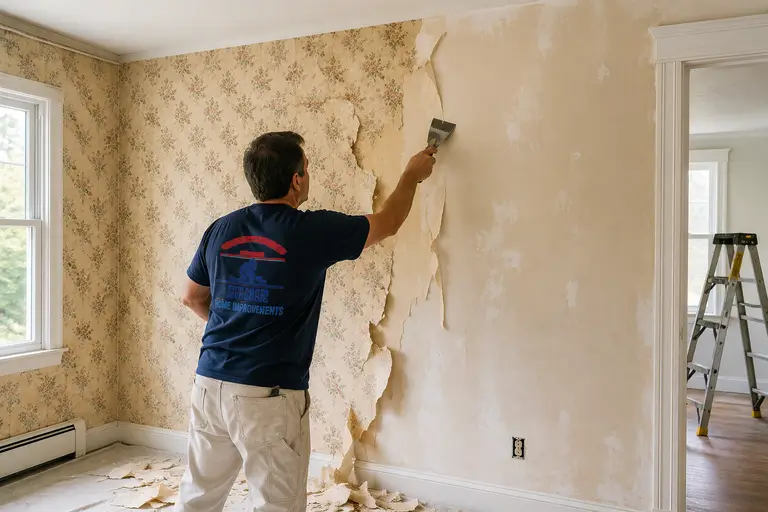
Check the bare wall for four things before any paste goes on: cracks, loose plaster, uneven texture and damp. Each one either shows through the paper or loosens it later. If old wallpaper is still up, taking that paper down comes first, because these checks need the plaster exposed.
- Cracks. Hairline cracks can show through thin papers. A crack that keeps reopening points to movement or water, and the EPA’s course on mold and moisture notes that moisture can pass from a crawl space into a building through cracks in walls.
- Loose plaster. Press and tap along the wall. A hollow sound or a section that flexes means the plaster has let go of the wood lath behind it and needs plaster repair before paper goes over it.
- Texture. Hold a work light flat to the wall. Ridges and old patches will read through the paper.
- Damp. Look for stains or bubbling paint.
When should you call a crew that both plasters and hangs paper?
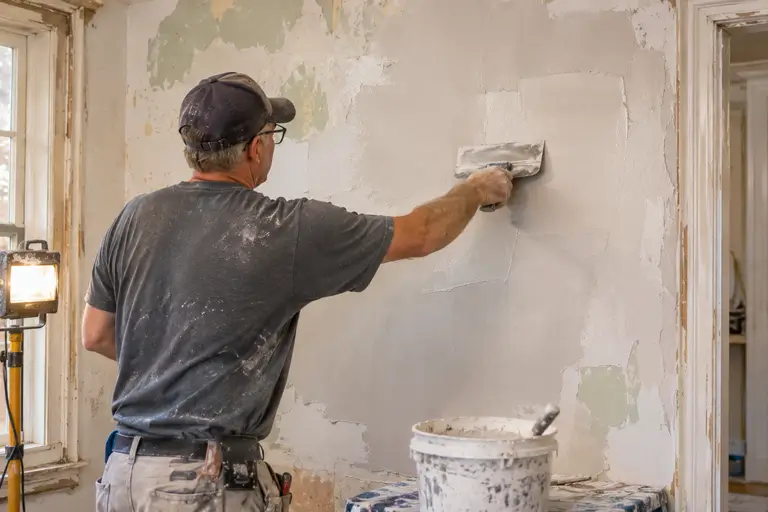
Call one when the wall checks turn up plaster work: sections pulling off the lath, cracks that need cutting out and refilling, or a surface rough enough to need a skim coat (a thin layer of plaster troweled over the whole wall). When one crew does both, the person hanging the paper saw the repair go on and knows when it is dry enough to prime. Ask who decides the wall is ready for paper, and how they judge that the patches have dried.
What adds time and cost when the plaster needs work first?
Two things set the extra time and cost: how much plaster work the wall needs, and how long that work has to dry before primer can go on.
- How far the plaster has let go. A few loose spots can be reattached to the lath and patched. A section that has failed may need to be cut out and rebuilt in layers.
- Patches or a skim coat. Patching covers only the damaged areas. A skim coat goes over the whole wall, which means more material and more sanding.
- Drying between coats. Each layer has to dry before the next goes on, and the last one before sealing. Deeper repairs can add visits to the schedule.
Repairing, skim coating and priming old or painted plaster
Old or painted plaster needs to end up firm, flat and coated with wallpaper primer before any paper goes on. How much work that takes depends on what the paint and plaster are doing now.
Older painted plaster may hold lead paint in its lower layers, and sanding or scraping disturbs it. OSHA’s lead standard sets worker exposure limits and required precautions for construction crews disturbing lead-based paint. Have older painted plaster tested for lead before any scraping or sanding, and if it tests positive, hire a crew that follows lead-safe work practices.
| Wall condition | Prep before primer |
|---|---|
| Sound paint with a sheen | Wash it, then scuff the gloss with fine sandpaper so the primer can bite |
| Flaking or chalky paint | Scrape back to paint that holds tight, then feather the edges smooth |
| Cracks and gouges | Open them up, fill, and sand flush with the wall |
| Rough or patchy across the wall | Skim coat, let it dry right through, then sand |
Primer goes on last, over the whole wall, once every repair has dried. If you prime only the patches, the paste soaks in unevenly between filler and old paint.
Hanging the paper: pasting the wall or the paper, and where to start
The paper’s label decides which surface gets the paste. Paste-the-wall papers, often nonwoven, go up dry onto a pasted wall and slide into place easily. Traditional papers are pasted on the back, then booked: folded paste to paste and left to rest for the time the maker gives. Skip the rest and the paper keeps expanding on the wall, which shows up as bubbles.
Start from a plumb line (a true vertical marked with a level), not the corner. Plaster corners can lean, and a first strip that follows one carries the tilt around the room. Center a bold pattern on the wall people see first. Otherwise begin beside a door, where the last strip’s pattern mismatch will hardly show.
We do the plastering as well as the wallpapering, so if your walls need repair before the paper goes up, get in touch with Quality Preferred Painting or call 781-356-2050.
Sources
- 1926.62 – Lead | Occupational Safety and Health Administration, Occupational Safety and Health Administration (OSHA), retrieved 2026-11-08.
- Mold Course Chapter 2: | US EPA, U.S. Environmental Protection Agency (EPA), retrieved 2026-11-08.
- Prepare Wall for Wallpaper | Preparing Wall for Wallpaper | Wallpaper Prep, brewsterwallcovering.com, retrieved 2026-11-08.