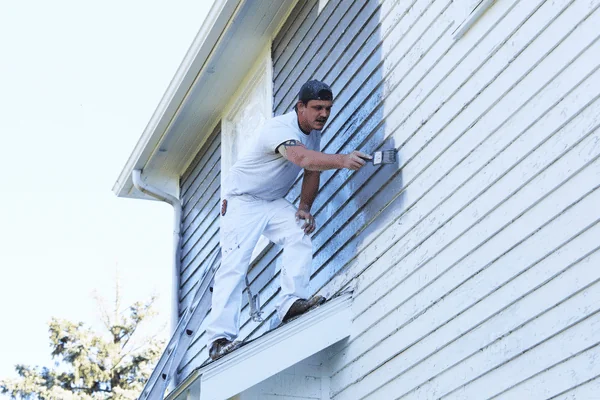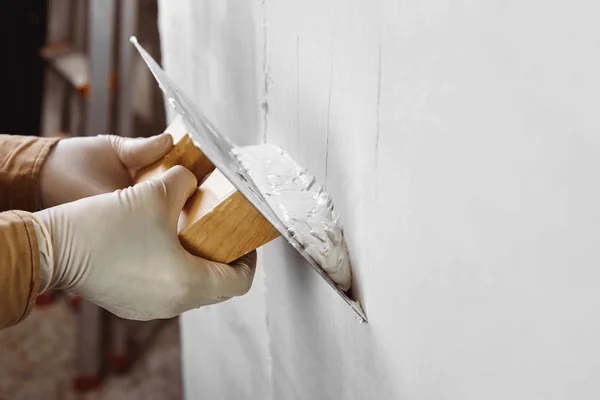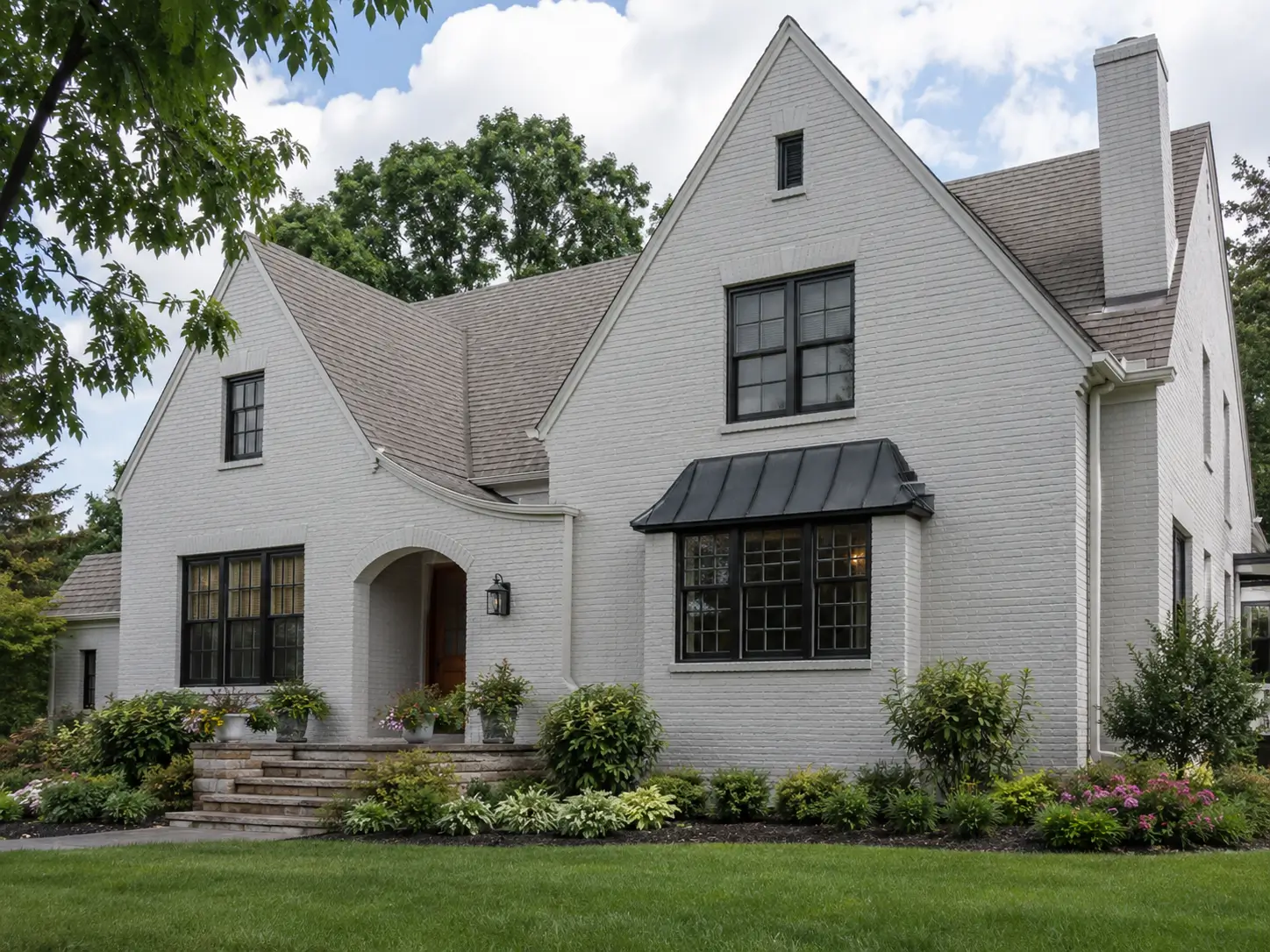
Yes, pressure treated wood can be painted, but only after the boards have dried out. New lumber is still wet from the treatment process, and paint applied too soon traps that moisture and peels. To check, sprinkle water on a board. If the water soaks in, the wood is ready for a good primer and exterior acrylic paint, or for a penetrating stain.
Key Takeaways
- Freshly treated lumber is too wet to hold paint, so it needs time to dry and weather first.
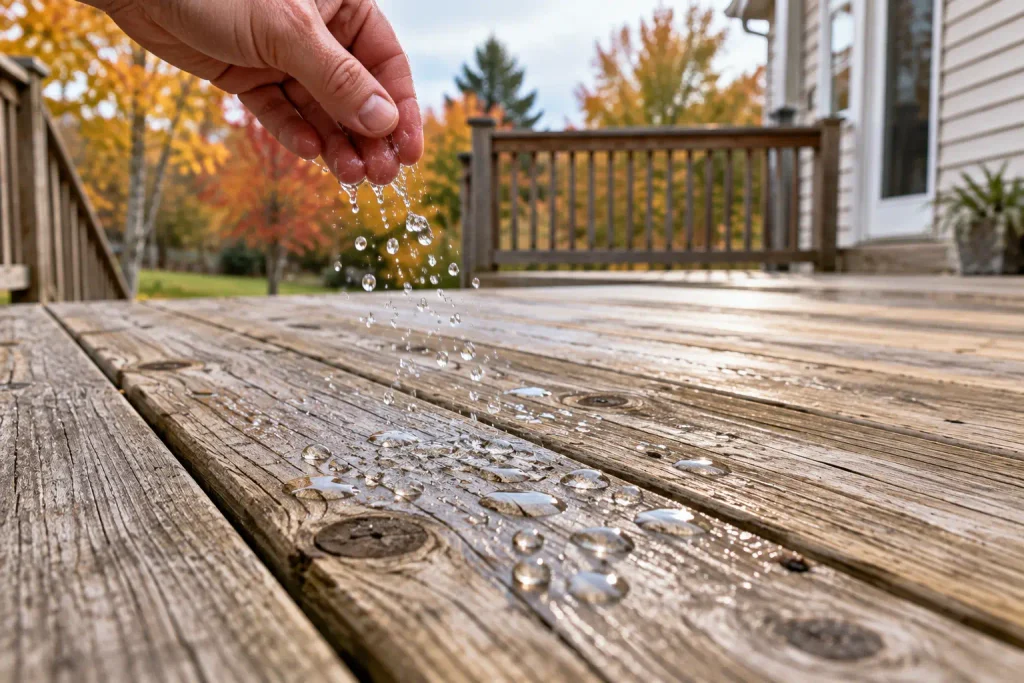
- A water sprinkle test shows readiness: beading means wait, while quick absorption means the wood can be finished.
- Stain usually suits deck floors, while paint over a primer works best on trim, railings and fences.
What does pressure treatment do to wood, and why does it matter for paint?
Pressure treatment forces preservative deep into the wood so it resists rot and insects. That process also leaves the boards soaked, and a wet surface will not hold a coating. The EPA’s page on chromated arsenicals explains that CCA bonds chemically with wood fibers to resist rot, fungi and insects.
Several preservatives are in use, and the EPA’s overview of wood preservative chemicals describes the range the agency regulates. The tag stapled to your lumber tells you what you have. Here in Braintree, the damp coastal air slows drying more than most homeowners expect.
How long should you wait before painting pressure-treated wood?
Wait until the wood has fully dried. For fresh lumber, that usually means weeks to months of weathering. USDA Forest Service research on finishing CCA-treated wood found that finishability depends on moisture content and surface weathering. Lumber stamped kiln-dried after treatment (KDAT) can be finished sooner.
To see whether your wood is ready, use this check:
- Sprinkle water on several boards, including shaded ones.
- If the water beads up, wait and test again in a few weeks.
- If it darkens and soaks in within minutes, the wood is ready to prime.
The American Wood Protection Association’s homeowner guidance explains the use categories printed on treated lumber. Temperature matters too. Our guide to how cold is too cold for exterior painting explains why the South Shore painting season runs from late spring into early fall.
Should you paint or stain pressure-treated decks, fences and trim?
For a deck floor, stain is usually the better choice. Paint forms a film that foot traffic and standing water break down. On trim, railings and fences, paint over a primer gives the crisp color match many houses need.
| Finish | Best for | Upkeep |
|---|---|---|
| Exterior acrylic paint over primer | Trim, railings, fences | Scraping and repainting when it peels |
| Solid stain | Deck floors, fences | Recoat when it wears thin |
| Semi-transparent stain | Deck floors, grainy boards | Easy recoat, no scraping |
| Clear water-repellent sealer | New wood while it dries | Frequent reapplication |
Our full comparison of paint versus stain for exterior wood goes deeper on the trade-offs.
Is painting pressure-treated wood worth the upkeep?
Painting is worth it on vertical surfaces like trim, posts and fence boards, where paint holds up well and matches the house. It is less worth it on deck floors. There, peeling paint means scraping every few years, while a worn stain recoats easily.
Check the boards before any finish goes on. Split, cupped or soft boards will not hold paint, and they need carpentry repair for damaged exterior wood first.
I own and manage rental properties, and I have added carpenters to our crew over the years. That experience has taught me to judge treated wood by how much maintenance each finish demands, not by how it looks on day one.
How do you clean, prime and paint it so the finish lasts?
Most peeling comes from skipping steps. A lasting finish follows this order:
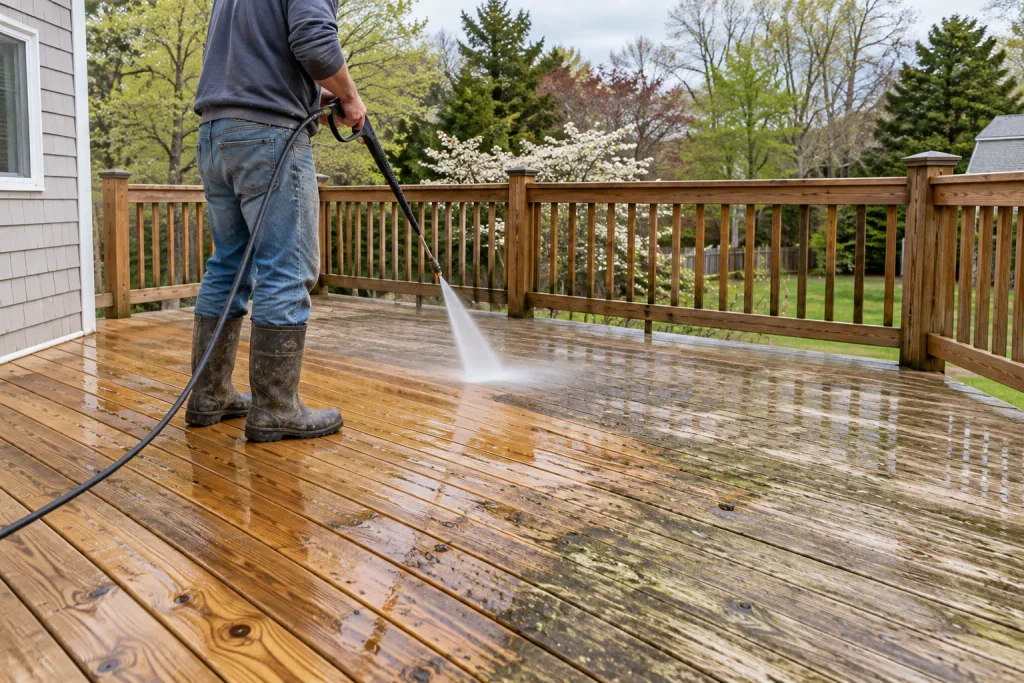
- Wash off dirt, mildew and mill glaze. Our pressure washing service on the South Shore handles this without gouging soft grain.
- Let the wood dry again, then repeat the sprinkle test.
- Sand raised grain lightly.
- Apply an exterior primer made for treated wood.
- Finish with two coats of exterior acrylic paint.
A peer-reviewed review of CCA-treated wood hazards documents environmental and health risks from this material. When you sand older boards, wear a mask and gloves and collect the dust.
What drives the cost of painting or staining pressure-treated wood?
These factors move the price:
- The square footage of deck boards, railings and balusters
- Whether you choose paint, which requires primer, or stain
- The amount of washing, sanding and board replacement needed
- Access problems, such as second-story decks or tight fence lines
- Removal of any old, failing finish
Our Massachusetts exterior painting cost guide shows the wider picture.
When should you hand the job to an exterior painter?
Hand the job to a painter when you would rather not wait, test, wash and prime the wood yourself. The same applies when boards need repair before any finish goes on. Quality Preferred Painting is family-owned, and we keep full-time painters and carpenters on staff. That lets one crew handle repair, prep and finishing from Braintree to Plymouth.
See our painting services across the South Shore, or call 781-356-2050 to have us look at your deck, fence or trim.
Get in touch to plan your project.
Frequently Asked Questions
What happens when you paint over pressure-treated wood?
If the wood is still wet, the paint blisters and peels, often within the first season. The trapped moisture pushes the film off the surface. On dried, primed wood, exterior acrylic paint bonds well and holds up on trim, railings and fences.
What is the best color to stain pressure-treated wood?
Mid-tone browns and grays hide the green tint of treated lumber best. Solid stains cover it fully. Semi-transparent stains let the grain show but may leave a greenish cast. Test a sample board in daylight before committing to a whole deck.
Is it okay to leave pressure-treated wood unpainted?
Yes. The preservative protects against rot and insects without a finish. However, unfinished boards gray, check and split as sun and rain cycle through them. A clear water-repellent sealer slows that weathering while the wood dries, until you are ready for stain or paint.
Sources
- Chromated Arsenicals (CCA), U.S. Environmental Protection Agency, retrieved 2026-09-28
- Overview of Wood Preservative Chemicals, U.S. Environmental Protection Agency, retrieved 2026-09-28
- Finishability of CCA pressure-treated wood, US Forest Service Research and Development, retrieved 2026-09-28
- For Homeowners, American Wood Protection Association, retrieved 2026-09-28
- Environmental and Health Hazards of Chromated Copper Arsenate-Treated Wood: A Review, PubMed Central, retrieved 2026-09-28