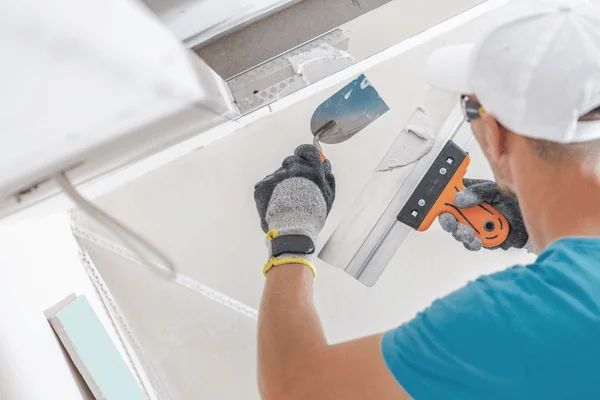
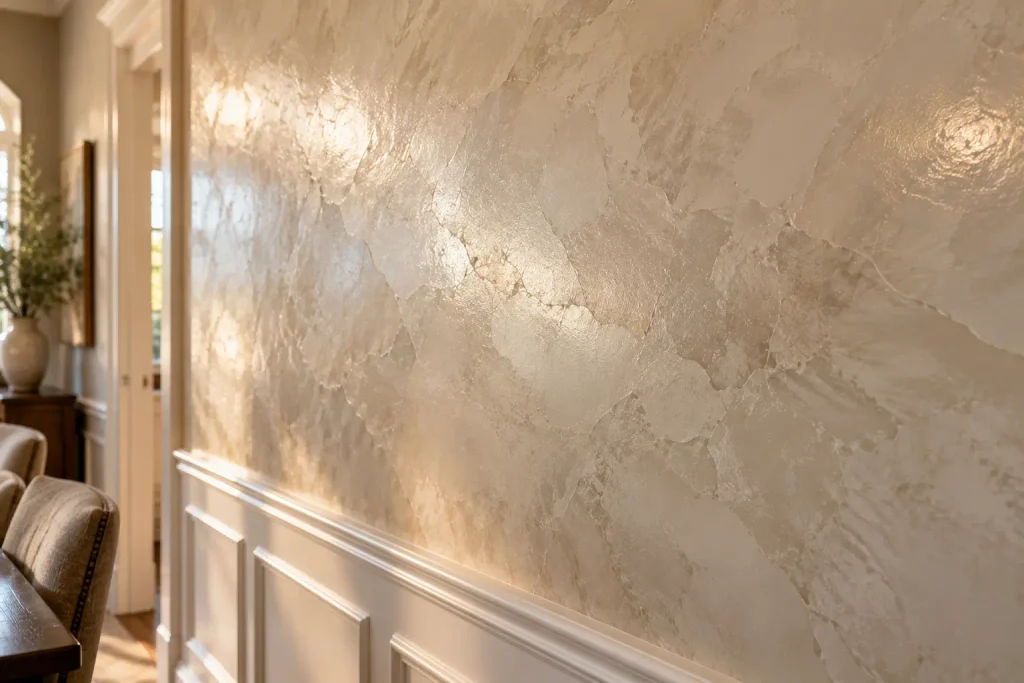
Venetian plaster walls are hand-troweled layers of lime-based plaster, burnished to a soft stone or polished-marble look that paint can’t copy. The downsides are real: the work needs skilled labor, time to cure, and careful patching when damaged. There is no set price. Cost rises with wall size, prep, number of coats and the finish you choose, so a site visit sets the number.
Key Takeaways
- Venetian plaster is built from thin troweled coats of lime plaster, then burnished for a stone-like sheen.
- Damp rooms, uneven substrates and high-traffic corners are the hardest places to make a plaster finish last.
- Price depends on wall area, prep, coat count and finish choice rather than any fixed rate.
What is Venetian plaster, and what finishes can it give a wall?
Venetian plaster is a lime-based decorative plaster. It goes on in thin, troweled coats and is then burnished so the wall reads like polished stone. Depending on the product and technique, it can finish matte and chalky or deep and glossy. A manufacturer’s [A specialist Venetian plaster supplier’s finishes page lists the range, including Marmorino, Fine Marmorino, Stucco, Polished Stucco and Tonachino.
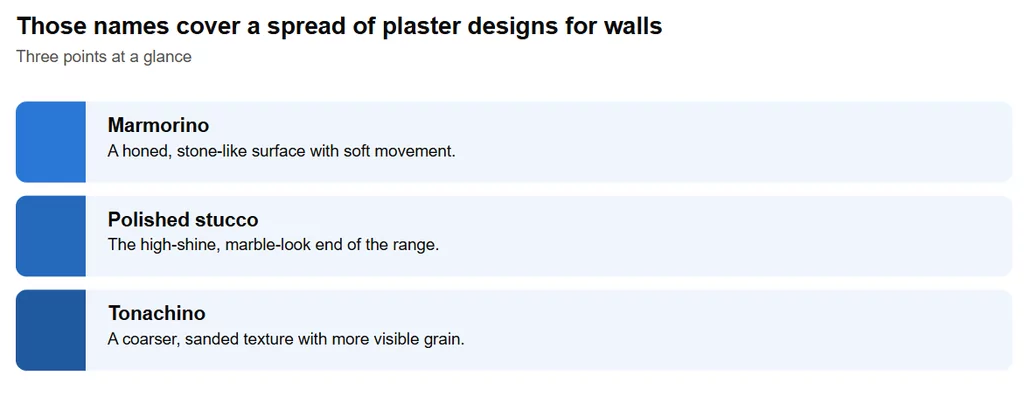
The movement in the wall comes from the trowel rather than a pattern roller, so no two walls look alike. If you are weighing that sheen against paint, our guide to types of paint finishes shows what eggshell, satin and semi-gloss can and can’t do next to plaster.
How is a Venetian plaster wall built up, from prep to final burnish?
A Venetian plaster wall is built in stages. The crew repairs and primes the surface, applies a bonding coat, and lays several thin plaster coats. They then burnish the final coat and seal or wax it if you want extra protection. Skipping prep is the most common reason a finish cracks or lets go.
- Assess the substrate. Old lath-and-plaster, veneer plaster and drywall each prep differently. Our plaster vs. drywall guide explains why.
- Test and repair. Work that disturbs painted surfaces in homes built before 1978 must follow the EPA Lead Renovation, Repair and Painting rule. Our page on lead paint in older South Shore homes covers what that means for Braintree-area houses.
- Bond. The ASTM C631 specification for bonding compounds is written for interior gypsum plastering. The principle carries over: a finish coat is only as good as its grip.
- Trowel thin coats, letting each one set before the next.
- Burnish with a steel trowel, then seal or wax.
During a Braintree winter, we keep the heat steady so each coat sets evenly.
Which rooms and walls suit Venetian plaster, and which don’t?
Venetian plaster suits dry interior walls that people see up close. Good candidates include living and dining rooms, entry halls, stairwells, fireplace surrounds and a feature wall behind a bed. It struggles in rooms that stay damp or take hard knocks.
Moisture is the first test. The EPA’s mold course is plain that controlling indoor moisture is the key to preventing mold on interior surfaces. A bathroom with a weak exhaust fan or a finished basement that runs humid is a poor home for a decorative plaster. A well-vented powder room is a different story.
Traffic is the second test. On the South Shore, a mudroom takes wet boots, hockey bags and dog leashes all winter. Outside corners, the wall behind a door and a narrow hallway see the same kind of abuse. These spots can still carry plaster, but plan on sealing them and doing occasional touch-ups.
What are the downsides of Venetian plaster?
The main downsides are labor, time and repair. The work needs a skilled hand and takes days rather than hours. Patches can show if the original mix and technique aren’t matched. The finish can also chip from a sharp impact, and sanding creates dust that has to be controlled. OSHA’s crystalline silica overview flags the respiratory hazard of dust from sanding or grinding silica-containing materials such as plaster and stucco.
| Approach | Look | Durability | Repair | Best fit |
|---|---|---|---|---|
| Venetian plaster | Stone-like depth, movement, sheen | Hard surface; can chip on impact | Skilled blend and re-burnish | Feature walls, formal rooms |
| Painted drywall | Flat, even color | Scuffs; easy to recoat | Patch and repaint | Most rooms, rentals |
| Painted skim-coat plaster | Smooth, solid wall feel | Dent-resistant | Patch, prime, paint | Older homes, hallways |
Are Venetian plaster walls expensive, and what makes a job cost more or less?
Venetian plaster walls usually cost more than paint because the finish is hand-applied in layers. There is still no fixed rate. The cost of a project comes down to the specific space and the work it needs. These factors move the number:
- Wall area and height: stair walls and tall ceilings need staging.
- Substrate condition: cracks, loose plaster or damaged board add repair time.
- Lead-safe prep on older painted walls.
- Finish choice: a polished finish takes more burnishing than a matte one.
- Custom tinting and matching an existing wall.
- Sealing or waxing for high-touch areas.
Our guide to what it costs to hire a plasterer walks through how plaster jobs are priced more broadly.
How do you care for, repair and refinish a plaster finish?
Clean a plaster finish with a soft cloth and mild soapy water, and avoid harsh or abrasive cleaners. If the wall was waxed, re-wax it when the sheen dulls. A plasterer can fill small dings and re-burnish them in place, blending the repair into the surrounding movement.
Refinishing plaster walls is the fix when damage is widespread or you want a new color. A fresh skim of plaster can go over a sound existing finish once the wall is cleaned and bonded. A plaster wall can also be primed and painted later if your taste changes, as long as the primer suits the surface.
How should you choose a plasterer for a decorative finish?
Pick a plasterer who can show you decorative walls they’ve finished and explain how they’ll prep your specific wall. They should also be able to fix the substrate before the finish goes on. Ask these questions:
- Can I see finished walls in person, not only photos?
- Which product and finish do you recommend for this room, and why?
- How will you handle pre-1978 paint and control dust?
- Who repairs cracked plaster, trim or framing if you find it?
Quality Preferred Painting is family-owned and operated. I worked in the family business through college and took it over after graduating. Our crew includes full-time carpenters alongside our painters, so the same team fixes damaged trim or a soft wall section before any plaster goes on. I also own and manage rental properties, so I judge a finish by how it holds up for years as well as how it looks on day one.
When you’re ready to have a wall looked at, start with our plastering services on the South Shore or call 781-356-2050.
Get in touch to plan your project.
Sources
- Finishes | Venetian Plaster – venetianplaster.com.au, retrieved 2026-09-28
- Lead Renovation, Repair and Painting Program | US EPA – U.S. Environmental Protection Agency, retrieved 2026-09-28
- C631 Standard Specification for Bonding Compounds for Interior Gypsum Plastering – ASTM International, retrieved 2026-09-28
- Mold Course Chapter 2 | US EPA – U.S. Environmental Protection Agency, retrieved 2026-09-28
- Silica, Crystalline – Overview – Occupational Safety and Health Administration, retrieved 2026-09-28