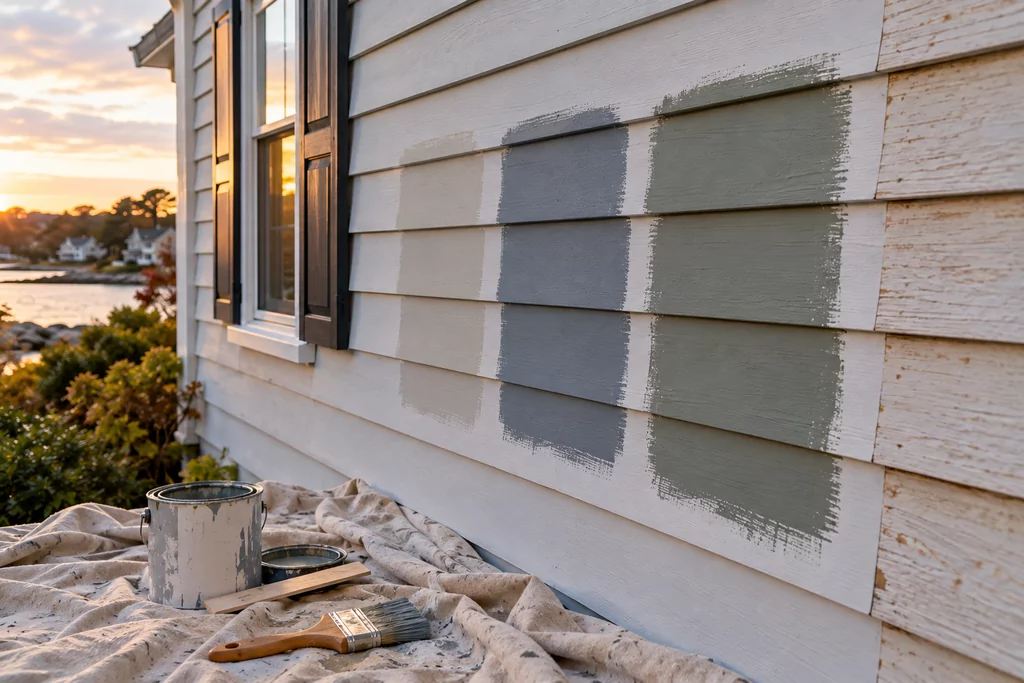
For most homes, the right exterior color is one that works with the parts you can’t change: the roof, any brick or stone, your siding material, and the houses around you. Pick a few candidates, paint large samples on the house, and watch them from morning to evening before you commit. That testing step is where good house painting decisions get made.
Key Takeaways
- Your roof, stone, siding and neighborhood should narrow your color choices before personal taste does.
- Dark colors on sunny walls absorb heat, which can warp vinyl siding and fade faster.
- Your house painting price depends on your home’s size, how many stories it has, how much prep it needs and the condition of your siding.
Why do exterior house colors matter more than you think?
Exterior color is the first thing anyone sees, and it stays up for years. A well-chosen color makes a house look cared for and fits the street. A poor choice can clash with the roof, make trim look dated, or fade unevenly on the sunny side.
If you’re weighing options, our exterior house painters on the South Shore see these outcomes on every job.
How do you choose the best paint color for a house exterior?
Start with the house itself, then add taste. Architecture, fixed materials, sun exposure and neighborhood rules each rule some colors out before you open a fan deck.
Consider your home’s architectural style
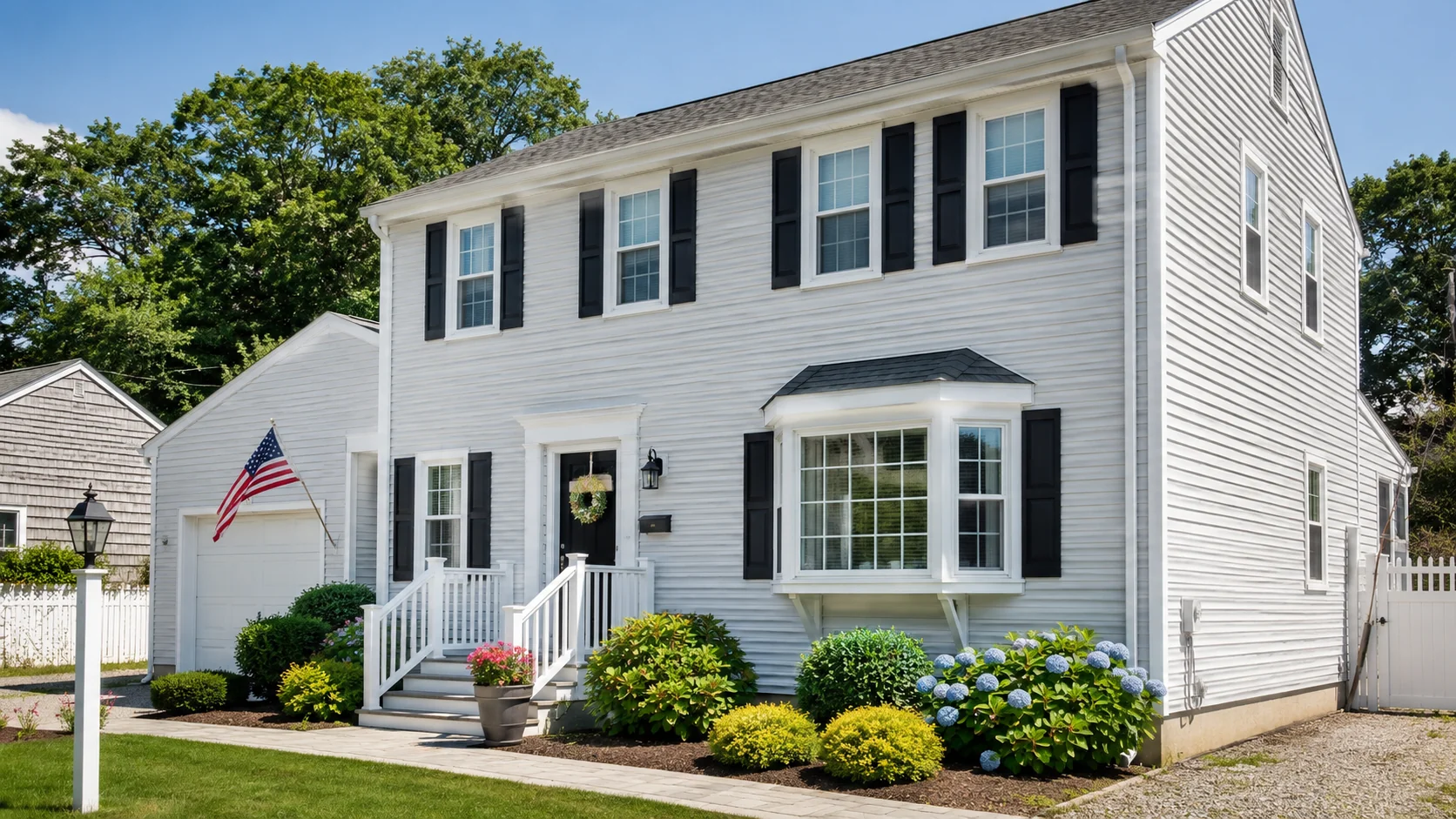
Colonials and capes suit classic, muted tones. Modern homes carry bolder contrast. Shingle-style coastal homes look right in soft, weathered shades.
Study your home’s fixed elements
Your roof, foundation, stone and brick are staying. Pull your siding color from their undertones so everything reads as one scheme.
Evaluate sunlight and shade
A south-facing wall washes colors out and heats up; shaded walls make the same color look deeper. Dark colors absorb far more heat than light ones, so they fade faster and put more stress on siding.
Check HOA or neighborhood requirements
Confirm any association or historic district guidelines before you buy paint. Getting approval in writing first keeps you from repainting a color the board turns down.
What are the most popular exterior house colors?
Whites, warm neutrals, grays and deep blues stay popular because they suit most architecture. Our guide to neutral colors that complement natural elements covers the greige family in more depth.
| Color family | Best suited to | Watch out for |
|---|---|---|
| Whites and off-whites | Colonials, farmhouses | Pure white can glare in full sun |
| Greige and soft gray | Most styles | Undertones shift from green to purple in some light |
| Tans and browns | Wooded lots | Can look flat without contrasting trim |
| Charcoal and soft black | Modern homes, accents | Heat gain on sunny walls |
| Navy and deep blue | Coastal and formal homes | Fades faster in strong sun |
| Pale greens and blues | Capes, cottages | Can read washed out from the street |
Which trim and accent colors pair best with your exterior?
Trim should either contrast cleanly or sit a few shades from the body color. These pairings are dependable:
- Crisp white trim with pastels or navy
- Soft black or deep navy accents against gray
- Warm cream trim with muted sage
Brush the trim sample right beside the body sample so you judge the pair together.
Which exterior paint colors suit different house materials?
The material under the paint changes how a color looks and how long it holds.
Vinyl siding
Vinyl absorbs heat, and going much darker than the original color can cause warping. Use paint made for vinyl and stay close to the factory shade or lighter.
Cedar shingles
Shingles have texture and grain that deepen a color. They need to be dry and sound before painting, and solid stain is often a better fit than paint.
Wood clapboard
Clapboard holds paint well with proper priming. Temperature during application matters, so read what temperature is too cold for exterior painting.
Brick homes
Brick absorbs pigment unevenly, so test first. See whether you can paint a brick house before deciding.
Stucco exterior
Texture throws shadows, so colors read lighter or deeper as the light moves. Check your samples on both a sunlit face and a shadowed one.
What color mistakes should you avoid when painting your house exterior?
Most regrets come from skipping the test step:
- Choosing from a small chip indoors
- Ignoring roof and stone undertones
- Picking a trend color you’ll tire of
- Going dark on a sunny wall or on vinyl
How do you test exterior house colors before painting?
Test on the house, at full size, in real light:
- Brush out large samples on two sides of the house.
- Check them morning, midday and evening, sun and clouds.
- Walk to the street and judge them from there.
Timing matters too; see the best time to paint a house exterior.
Should You Hire Professional Exterior House Painters?
Yes, if your home is older or has prep work ahead.
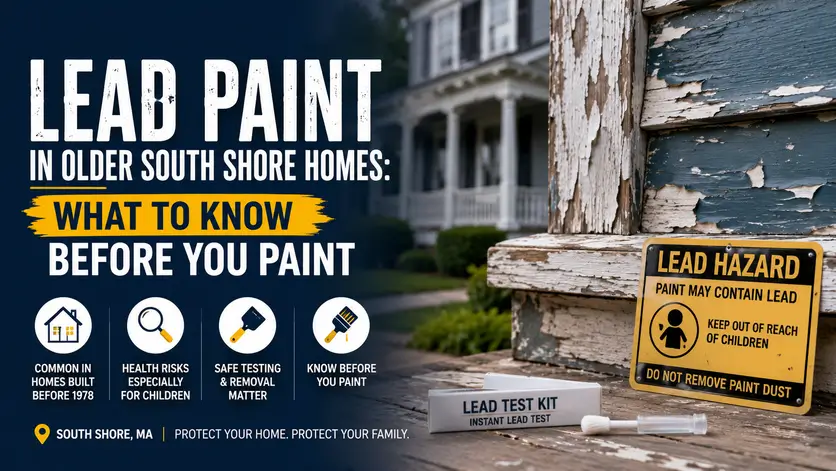
If it was built before 1978, the EPA’s Lead Renovation, Repair and Painting Program requires contractors who disturb lead paint to be Lead-Safe certified and follow specific work practices. The Consumer Product Safety Commission banned lead-based paint for consumer use in 1978, and research published through NIH found that power sanding and scraping old house paint can release lead and other metals into the surrounding soil.
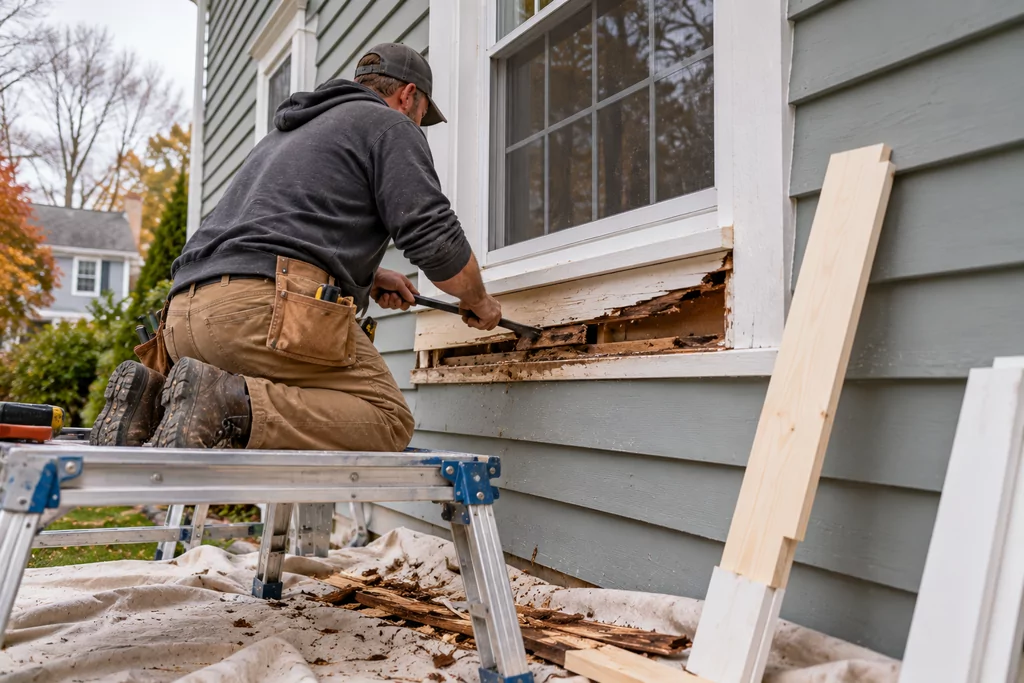
We’re a family-owned company with six full-time painters and three full-time carpenters, so rotted trim gets fixed before it gets painted.
I also own and manage rental property, so I look at color the way a property manager does: will it wear well and suit the building for years? Compare approaches in choosing the best way to paint a house.
How much should it cost to paint a whole house?
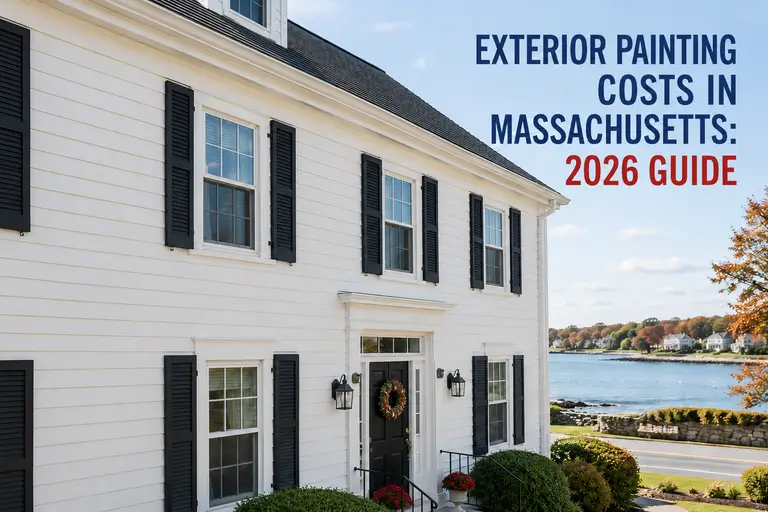
When I estimate a South Shore home, the price comes down to its size, how many stories it has, how much prep work it needs and the condition of the siding, which is why I won’t quote a single number here.
A whole-house job, exterior plus house interior painting, is priced on square footage, number of stories, prep and repairs, lead-safe work practices on pre-1978 homes, and how many coats a color change needs. Our guide to estimating an exterior painting job walks through each factor.
How much should it cost to paint the exterior of a 2000 square foot house?
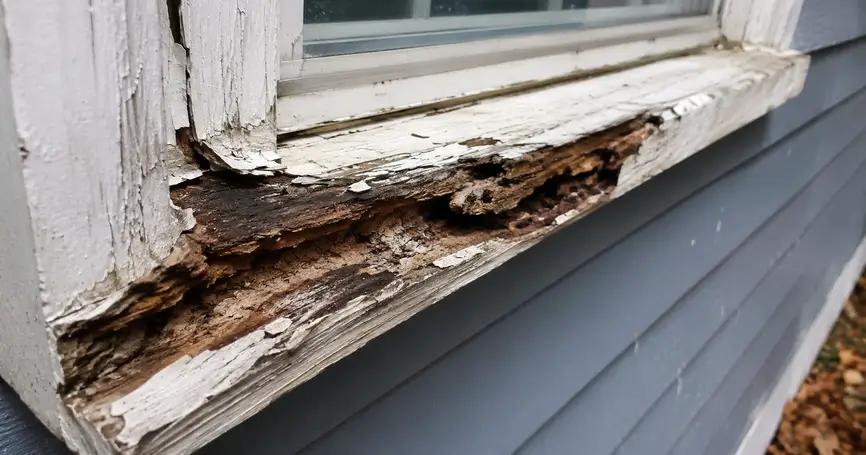
The same factors apply, and at this size prep and height matter most. Peeling clapboard, rotted trim, a second story needing staging, and a dark-to-light color change all add labor. A written estimate after a walk-around is the only reliable number.
How much does it cost to paint a 1500 sq ft house?
A smaller footprint means less surface, but condition still drives the price. A one-story ranch with sound siding costs less than an older cape needing scraping and lead-safe practices. Ask for an estimate that lists prep, repairs and coats so you can compare bids line by line.
What are my final thoughts on choosing home exterior paint colors?
Let the roof, stone and siding narrow the field, test big samples in real light, and keep dark colors off sunny vinyl. When you’re ready, reach out to our house painters serving Canton and the South Shore for a walk-around and written estimate.
Frequently Asked Questions
What are the best colors for selling my house quickly?
Soft neutrals like greige, light gray and warm white appeal to the widest range of buyers. They let the house read as clean and cared for. Pair them with crisp trim and a front door in navy or black for contrast without narrowing your buyer pool.
How do climate and location affect exterior paint color choices?
Sun and salt air are the big factors. South-facing walls fade dark colors faster and heat vinyl, while coastal exposure favors quality acrylic paint and lighter shades. Shaded, wooded lots make colors look deeper, so test samples right where your house sits.
Can neighborhood aesthetics influence my color choice?
Yes. Look at the houses on either side and across the street, then choose something that complements them rather than repeats or clashes. Check association or historic district rules first, since some neighborhoods restrict colors and require approval before painting begins.
What finishes are best for exterior house paint?
Satin or low-luster works well for siding because it hides texture flaws and cleans easily. Semi-gloss suits trim, doors and shutters. Acrylic exterior paint resists weathering and fading, and it flexes as wood siding expands and contracts through the seasons.
How often should I repaint my house exterior?
Repaint when you see fading, chalking, peeling or bare wood, not on a fixed calendar. Sun exposure, siding material and prep quality all change the timing. Walking the house each spring and touching up trim and failing spots early extends the life of the job.
Sources
- Lead Renovation, Repair and Painting Program – U.S. Environmental Protection Agency, retrieved 2026-09-28
- Lead in Paint – U.S. Consumer Product Safety Commission, retrieved 2026-09-28
- Multiple metal contamination from house paints: consequences of power sanding and paint scraping in New Orleans – National Institutes of Health, PMC, retrieved 2026-09-28