Good ideas for painting kitchen cabinets pair a color and layout you will like for years with a finish that stands up to daily hands and spills. This page is for homeowners in Braintree and across the South Shore deciding whether, and how, to repaint. It comes from Steve Austin, owner of Quality Preferred Painting, the family-owned painting company he took over in 1992.
Key Takeaways
- Find out what your doors are made of first, because a vinyl-wrapped or peeling surface can defeat the best paint.
- Paint the island a contrasting color only if it stands on its own. One joined to the counter run looks unplanned.
- Before anyone sands a door in an older home, find out whether lead paint sits underneath, since sanding is what releases it.
How can you tell if your cabinets will take paint well?
Solid wood and MDF cabinets generally take paint well once they are clean and sound. Thermofoil, and veneer that is already lifting, are the ones to question before you settle on a color. Four checks tell you which kind you have:
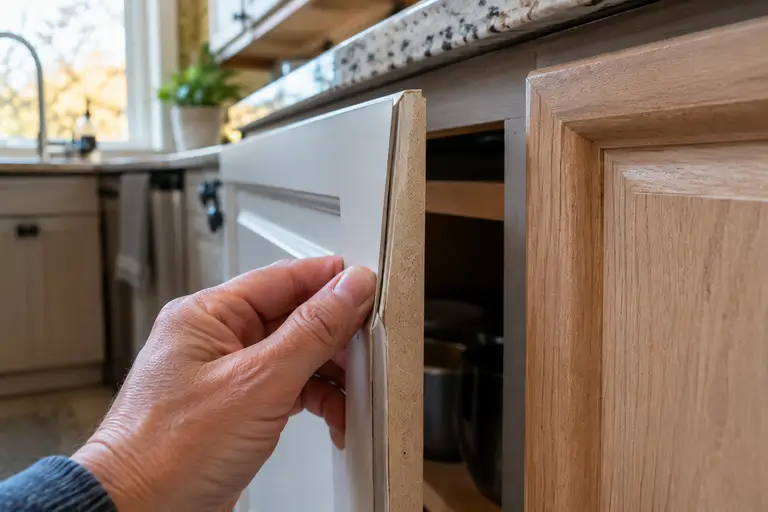
- Material. Look closely at a door edge. Wood grain or a smooth MDF edge is a good base. A vinyl skin wrapped over the edge is thermofoil, which tends to lift with heat from the range, and paint lifts with it.
- Condition. Swollen corners near the sink or dishwasher, delaminating veneer and loose hinge screws all need repair first, because paint will not hide them.
- Grease. Run a finger over the doors beside the stove. A tacky film there will keep primer from bonding until it is cut with a degreaser.
- Existing finish. Rub a hidden spot with a rag dampened in denatured alcohol. If the coating softens or smears, it is a water-based paint or shellac. If it stays hard, it is likely an oil or factory finish that calls for a bonding primer.
Our gallery of finished painting work shows what completed jobs look like.
Cabinet color ideas that hold up: whites, warm neutrals, greens and blues
Colors hold up when they suit what stays put: the countertop, the floor and the light the room gets. A white with a little warmth reads clean without turning stark beside stone or tile. Warm neutrals such as a gray-beige show fingerprints and grease less than bright white. Greens and blues suit quiet counters. Judge a sample door in both morning and evening light before committing. If your walls or counters are gray, our notes on colors that go with gray help narrow the choice.
Two-tone kitchens, contrasting islands and other layout ideas
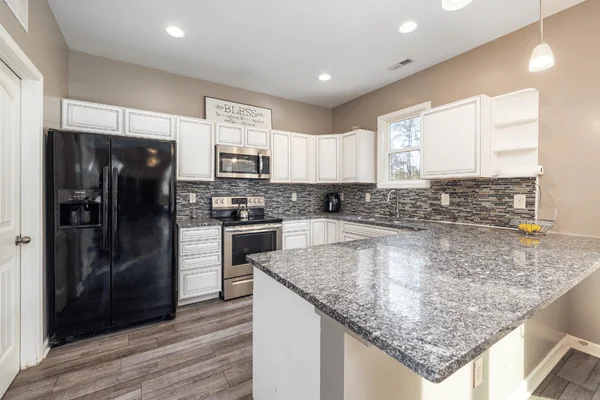
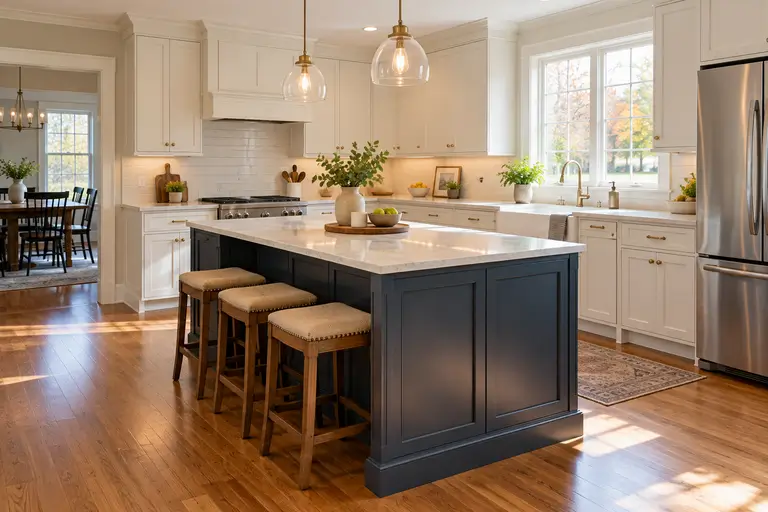
A two-tone kitchen puts the deeper color on the base cabinets or the island and keeps the uppers light, so the walls feel open. A contrasting island reads as a choice when it stands apart from the perimeter runs. Butted against them, the change can look accidental. Another option is to paint a tall pantry or the inside of glass-front uppers in the accent. Decide where each color stops before priming: an end panel or filler strip makes a clean break, while a switch midway along one run does not.
Steps to a cabinet paint job that lasts, including lead paint in older homes
A finish lasts when paint goes over doors that are clean, sound and primed. In an older house, lead comes first.
- Find out about lead before sanding. The CDC notes that lead-based paint in older homes can create hazardous dust when sanded or scraped during work such as repainting cabinets. Under the EPA’s Renovation, Repair and Painting (RRP) Rule, a company paid to disturb paint in a home built before 1978 must hold its own EPA firm certification. Each job also needs a certified renovator to direct the lead-safe work and train the crew. The minor-repair exemption covers small patches, not a full set of sanded cabinets. Original cabinets are the ones to check, as our page on lead paint in older South Shore homes explains.
- Remove doors and hardware. Label each door to its opening so it goes back where it came from.
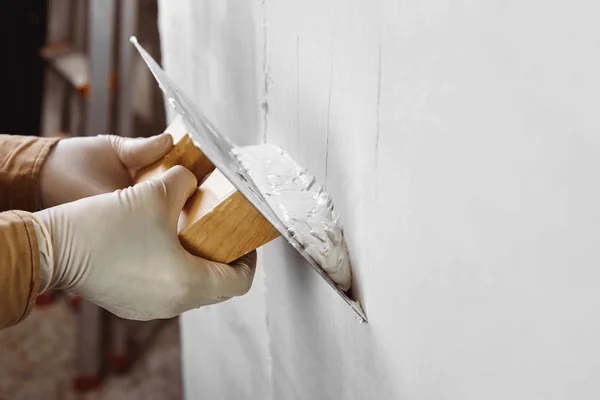
- Degrease, then scuff-sand. Wash with a pre-paint degreaser such as a TSP substitute, and rinse off the residue. Sanding then dulls the old coating so primer has something to grip.
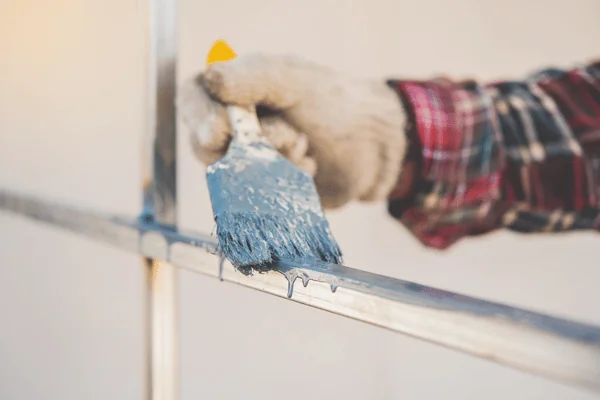
- Prime for the old finish, then build thin coats. A bonding primer grips an oil or factory finish. Over oak, a shellac-based primer stops tannin bleeding through. Spraying lays coats on the doors without brush marks, while the boxes are usually brushed and rolled in place. Sand lightly between coats.
- Let it cure before rehanging. Paint feels dry well before it hardens. Hinges pressed into soft paint dent it, and doors closed too soon stick to the frames. How long to wait depends on the product and the room’s temperature.
If you hire out cabinet refinishing, ask how the quote handles each step. Our cabinet refinishing cost breakdown covers pricing the job.
Choosing a sheen and a paint made for cabinetry
Pick a satin or semi-gloss sheen in a paint the maker labels for cabinetry or trim. More sheen wipes clean more easily, but it also shows every brush mark and dent in an old door, so the condition of your doors should guide how glossy you go. Cabinet enamels, often waterborne alkyds or urethane-modified acrylics, level out as they dry and harden more than wall paint does. Our guide to paint finishes compares each sheen in more depth.
What drives the cost of painting cabinets, and when should you hire a pro?
The cost of painting cabinets depends on how many pieces there are, what shape they are in and what is under the old paint. Hire a pro when repairs or a hard factory finish stand between you and a coat that holds, or when the house is old enough for lead. In that case, the EPA’s guidance on reducing lead exposure at home advises hiring a certified lead-based paint inspector or risk assessor to find out whether your home has lead-based paint, or assuming it does.
| Cost driver | What raises it | What keeps it down |
|---|---|---|
| Door and drawer count | More pieces to remove and coat | Painting only the island or one run |
| Door style | Raised panels and detailed profiles take longer to sand evenly | Flat slab or plain Shaker doors |
| Repairs | Swollen corners or lifting veneer fixed first | Sound boxes and doors |
| Existing finish | Grease buildup, or a factory finish needing bonding primer | Clean, sound water-based paint |
| Lead | Inspection, or lead-safe work if lead is assumed | Testing that finds no lead |
We are a family-owned painter based in Braintree. Our service areas: Boston, Brookline, Dorchester, Dover, Milton, Quincy, Westwood, Braintree, Cohasset, Duxbury, Hingham, Hull, Marshfield, Norwell, Pembroke, Plymouth, Rockland, Scituate, Weymouth, Abington, Avon, Bridgewater, Brockton, Canton, Dedham, East Bridgewater, Easton, Hanover, Hanson, Holbrook, Norwood, Randolph, Sharon, South Shore, Stoughton, West Bridgewater, Whitman. To price your own kitchen, get in touch with us or call 781-356-2050.
Frequently Asked Questions
What cabinet colors make a kitchen look expensive?
Muted, slightly grayed shades look richer than bright, saturated ones, whether you choose a deep green, an inky blue or a soft white. Carry that restraint to the hardware, with one metal finish on every door and drawer, matched to the faucet. Paint the end panels and toe kicks too, so no strip of old factory finish shows.
What are the downsides of painting kitchen cabinets?
Painted doors chip along the edges and around the pulls, where hands land every day. A touch-up can show once the original coat has aged. Paint also commits you. It cannot change the door style, and going back to stained wood later means stripping every piece.
Sources
- Lead Renovation, Repair and Painting Program | US EPA, U.S. Environmental Protection Agency (EPA), retrieved 2026-10-05.
- Reduce the Risk of Lead Exposure at Home | US EPA, U.S. Environmental Protection Agency (EPA), retrieved 2026-10-05.
- About Lead in Paint | Childhood Lead Poisoning Prevention | CDC, Centers for Disease Control and Prevention (CDC), retrieved 2026-10-05.